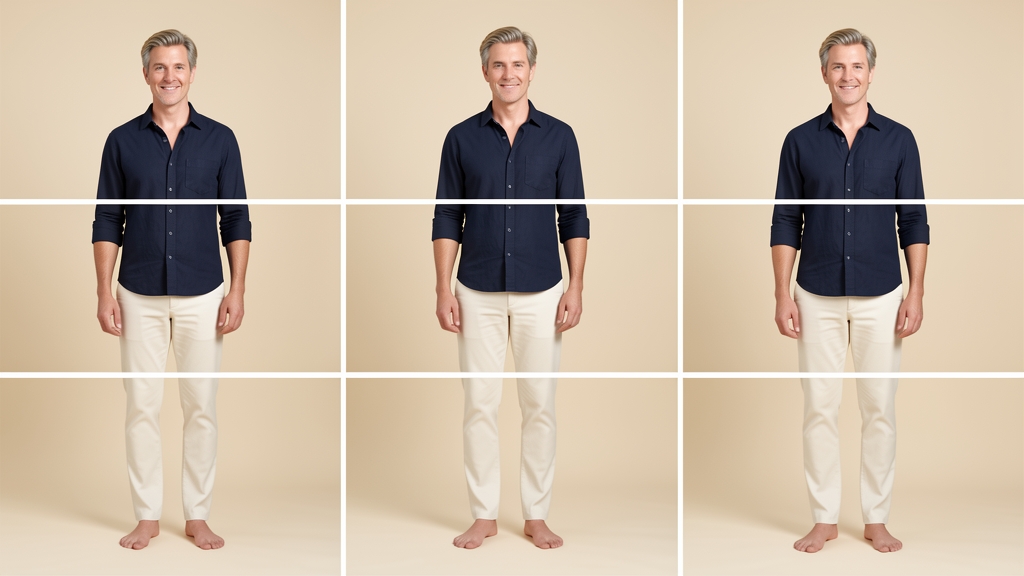
Are you still booking expensive studio time and coordinating massive production teams just to get a cohesive grid of editorial portraits? In the fast-paced world of visual marketing, waiting weeks for a character-led photo essay is no longer sustainable. Generative AI is rapidly changing how we approach campaign photography, allowing brands to instantly create complex, multi-shot narratives that maintain absolute consistency without ever leaving the desk.
Prompt of the Week: The Editorial 3x3 Grid
Category: Portraits & Characters
Difficulty: ⭐⭐⭐⭐⭐ (Advanced)
Recommended Model: Nano Banana Pro
"Editorial 3x3 photo grid in a clean soft beige studio. Character (matches reference 100%) wearing lightweight dark navy shirt, ivory trousers, barefoot for raw simplicity. Lighting: large diffused key light directly front-right, silver reflector left, subtle rim from top. Shots to include: 1. extreme close-up of lips + cheekbone with blurred hand partially covering (85mm, f/1.8, razor-thin DOF); 2. tight crop on eyes looking into lens with reflection of light strip visible (85mm, f/2.0); 3. black & white close portrait resting chin on fist, face filling frame (50mm, f/2.2); 4. over-shoulder shot, blurred foreground fabric curtain framing half face (85mm, f/2.0); 5. very close frontal with hands overlapping face, light streak across eyes (50mm, f/2.5); 6. tight angled portrait showing hair falling into eyes, soft-focus background (85mm, f/2.2); 7. crop of hands touching jawline, eyes cropped out (50mm, f/3.2, detail-focused); 8. half-body seated sideways on low cube, head turned sharply away, blurred foreground (35mm, f/ 4.5); 9. intense close-up of profile with single tear-like water droplet, cinematic light slice across (85mm, f/ 1.9). Angles: mostly tight headshots with slight high/low tilts, maintaining variation. Capture RAW, professional muted grade, smooth tonal contrast, subtle cinematic grain. Mood: intimate, introspective, character-led editorial minimalism with delicate use of fabric as prop."
How This Prompt Works
This prompt is a masterclass in directed photography. Instead of asking for a single, generic portrait, it instructs the model to generate a cohesive 3x3 photo grid. By explicitly defining nine distinct frames, it forces the engine to act as an art director, photographer, and layout designer all at once. This structural framing is what elevates a simple image generation into a complete editorial campaign.
The magic lies in the extreme technical precision. Notice how each shot dictates specific focal lengths (e.g., 85mm, 50mm, 35mm) and apertures (f/1.8 to f/4.5). These parameters meticulously control the depth of field and perspective for every panel. When combined with granular lighting instructions—like a "diffused key light directly front-right" and a "cinematic light slice"—the model renders realistic, studio-quality textures rather than flat, synthetic skin.
Finally, the prompt locks in the aesthetic through a unified styling and grading baseline. Terms like "professional muted grade," "smooth tonal contrast," and "subtle cinematic grain" ensure that despite the varied angles and crops across the nine shots, the final grid looks like a curated spread from a high-end fashion magazine.
Marketing Use Case: The "Meet the Persona" Campaign
For fashion brands, skincare lines, or lifestyle agencies, this prompt is perfect for launching an Instagram grid takeover or a highly engaging multi-slide carousel. Instead of posting one static image, you can crop the final 3x3 grid into individual high-resolution squares to schedule a week's worth of intimate, visually striking content. This approach builds a deep narrative around a brand persona, keeping the audience lingering on subtle details—resulting in higher retention and elevated brand prestige.
Variations and Customization
You can easily adapt this grid format for different marketing verticals by swapping out the subject and props:
- Skincare & Beauty: Swap the clothing for bare shoulders and change the lighting to a "dewy, high-key softbox glow." Adjust the extreme close-ups to highlight glass skin textures, water droplets, and macro shots of moisturizing serum on the cheekbones.
- Premium Tech (e.g., Audio): Change the studio to a "cool slate grey environment" and have the character wearing sleek, over-ear metallic headphones. Use the tight crops to focus on the interplay between the user's focused expression and the brushed steel textures of the device.
- Artisan Food & Beverage: Transition the character to a barista or chef in a moody, dark-wood environment. Replace the face close-ups with tight macro shots of hands pouring latte art, dusting flour, and inspecting ingredients (e.g., 100mm macro, f/2.8).
Tips & Best Practices
- Lock in your reference: When utilizing character consistency tools, ensure your base reference image is well-lit and neutral. The engine relies heavily on this anchor to keep the face consistent across all nine panels.
- Balance the grid: Notice how the original prompt mixes extreme close-ups (lips, eyes) with wider context shots (half-body seated). This variety is crucial for a dynamic layout. Avoid using nine identical framing styles.
- Leverage focal lengths: Use 85mm for flattering, distortion-free portraits, 50mm for natural human-eye perspective, and 35mm when you need to introduce more environmental context.
- Embrace imperfections: Adding keywords for "cinematic grain" and "subtle rim light" prevents the final output from looking too artificially perfect, grounding your marketing assets in reality.
Elevate Your Visual Storytelling
Generating a high-end, nine-panel editorial spread from a single prompt opens up massive scaling opportunities for your brand's visual identity. But prompt engineering is just the beginning. To truly automate and integrate these assets into your campaigns at scale, you need a dedicated workflow.
Ready to bring studio-quality photography into your daily content engine? Explore how the intelligent automation at VIVID can transform your creative process, ensuring absolute brand consistency and stunning visuals without the heavy production costs.